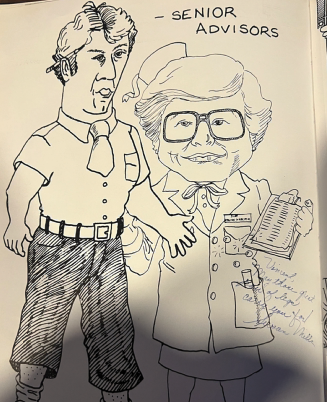
I learned I had a great set of legs.
VC (childhood and current friend)
My response:
You still do!
More on my friend and something about cellular respiration:
This response from my friend Vin made me laugh out loud. He was one of the top athletes at my high school and I count myself lucky that he is still one of my closest friends. I laughed because of what I think I remember that precipitated this comment. This may be a completely false account that I created in my mind, but it’s MY memory and I’m sticking to the story.
Vin was taking biology his sophomore year. The class was learning about cellular respiration- how we get the energy from our food to do things like move, grow, and run on a soccer field. Their teacher was trying her best to make things real and relevant to her students.
As I said, Vin was a very good athlete. So his teacher used him as an example of how the food he eats is converted into usable forms of energy for his cells. That energy production (actually conversion) is what allows him to be so successful on the soccer field. Making such a complicated process clear; when it includes terms like glycolysis, Krebs Cycle, NADH, ADP, ATP, NAD+, electron transport chain .. is very difficult. The way to do it is to try to get students to see things as happening to and within themselves. Make it so it’s not a foreign, outside action. Have students take ownership of the process. She wanted them to understand that it’s not an alien procedure, but something that happens continually to all living things. The best teachers try to give their students a way to see themselves in the lesson. Cellular respiration isn’t some ethereal, external thing.
So how does Vin (and other living things) turn a meal into a 35 yard strike into the upper corner of a goal? As I have indicated, it’s complicated. I am going to give you a condensed version. It starts with glucose, a molecule made of six carbon, six oxygen, and twelve hydrogen atoms. When you consume food your body takes that glucose and uses it to start the process of cellular respiration. You will use glucose, along with oxygen gas to release energy that is thought of as being stored in the chemical bonds. The equation looks like this:
C6H12O6 + 6 O2 → 6 CO2 + 6 H2O + energy
Glucose and oxygen react to make carbon dioxide and water
Energy is always required to break chemical bonds. And energy is always released when bonds form. The bonds that make up C6H12O6 and O2 are less stable than the bonds that form CO2 and H2O. So when given a little bit of energy to start the reaction, the final result is available energy. Energy is used to run, grow, move, … This is all an oversimplification, but the starting and ending points are the same. We eat things and breathe oxygen, then we create carbon dioxide and water as waste products.
For our cells to control this reaction there are many intermediate steps. That is what your biology teacher spent so much time teaching you. The glucose is actually broken down into smaller, 3-carbon molecules first. That process creates four molecules of adenosine triphosphate (ATP). ATP can be thought of as the actual energy carrier. Its bonds are less stable than adenosine diphosphate (ADP). So when ATP becomes ADP energy is made available. Remember that every bond broken requires energy put in. So even though the process of breaking down the glucose makes four ATP, only two survive to the next steps.
The three-carbon molecules will then go through the Krebs Cycle, also called the Citric Acid Cycle. There more ATP are created so that 30-32 ATP total are formed from the breakdown of one glucose molecule. This is the energy your cells use. So it’s the energy you use. Each gram of glucose consumed can produce about 1.5 Calories of available energy.*
The beginning of this process is anaerobic. It doesn’t use oxygen. The majority of your energy conversion is through aerobic respiration. When your cells don’t have the available oxygen, fermentation occurs which produces the two ATPs. In animals, another product of fermentation (a waste product) is lactic acid. It’s that build up of lactic acid that you experience as sore muscles. It means you aren’t supplying your cells with enough oxygen for aerobic metabolism to occur efficiently for maximal ATP production.
So why can’t you supply your cells with enough oxygen after exercising a lot? It has to do with how efficiently you breathe. When you breathe in you are taking in air that is about 21% oxygen. Your red blood cells take that O2 and bring it to every cell in your body. At the same time CO2 is dropped off and you exhale it.
Air is 21% O2 and only 0.04% CO2 when you inhale it. You exhale air that is about 16% O2 and 4% CO2. Your lungs fill up with the CO2 rapidly. After exerting yourself for a while you can’t get the CO2 out quickly enough. It builds up and prevents the absorption of oxygen. You feel that build up as a tightness in your chest. You lose your breath. To get rid of that feeling you should concentrate on getting the CO2 out, not getting more air in. Once you get the excess waste gas out, you have more room for your blood cells to pick up that oxygen to get to your cells.
Now, what does this have to do with Vin? He is an athlete. He is more efficient at getting the oxygen to his cells for a longer and more consistent amount of time. He can get the CO2 out of his lungs effectively. He can run faster and longer because his cells don’t have to resort to only anaerobic respiration. That is what his biology teacher was trying to convey to her class full of sixteen-year olds. All that I wrote so confusingly above makes more sense when you picture it happening to you. (Sixteen-year olds are a tiny bit egotistic.)
But this doesn’t explain why I laughed so hard when Vin said he had a great set of legs. It’s what his teacher said two years after his taking the class that did that. When we were graduating we not only had friends sign our yearbooks, but also some of our favorite teachers. And then there was what Vin’s biology teacher wrote in his yearbook…, “Vincent, May those great pair of legs carry you far!”
I am certain she was referring to how he would use his athletic successes to help students internalize and better understand cellular respiration. But two years later, it just sounded kind of creepy!
*A small bag of M&Ms has 240 Calories of available energy. That is enough energy for an average adult to walk up the Empire State Building 3.5 times! Since our bodies aren’t 100% efficient, we could really only get about 15% of the available energy.
Leave a Reply