Don- love this thread! I have learned so much from the amazing teachers at thayer and could give examples for hours but here are a few highlights 😉 mr Earle- semper ubi sub ubi (always wear underwear) while it’s all I remember from Latin, bill earle would be proud bc I was terrible at it. Cedrone one time taught us about integrity- example being putting ur shopping cart back in the trolley stand when no one is watching. I do that every time at the grocery store,think of him and smile.Don donovan-“Time out for nature” how often did u do that at soccer practice for a sunset, moon, birds Flying V. I take time to appreciate the small things often with students, friends and family and think of u fondly! Most of all, I was shown how to learn (and later teach) how to be a decent member of society, always be curious and a life long student, true friendship, leadership, community service and many life skills. Thayer definitely shaped the person I am and directed me through multiple amazing careers. I hope u and all the TA faculty know how impactful and appreciated you are!
KK (former student and colleague)
My response:
Nature! I really miss that particular part of coaching. I hope you know that you are sorely missed, especially in the science department. I think that being that life-long learner is at the core of everything. If you’re learning, you’re not stagnant and therefore appreciate things and people more. If you’re learning, you’re not bored and therefore can share your energy and excitement with others. If you’re learning, you are always practicing being a positive member of society (with integrity and decency). I am thrilled with all you have done since leaving TA both as a student and a faculty member, and please know that I would take you back in a heartbeat!
More about “Nature!”:
For many years I was the Girls’ Varsity Soccer coach. It was a great part of my job in that I got to see many of my students in a completely different light. It was also nice to end each day running out on a field and kicking a ball; just enjoying the outside after spending the day in the classroom.
Soccer is a fall sport at the school I taught. So the end of practices would get darker as the season progressed. With Autumn in full swing by late October we would be ending sessions as the sun was setting earlier and birds began to migrate. During many drills I would suddenly stop things and yell, “Nature!” The team would then have to look around to find out what I was highlighting. It could be a full moon rising, a flock of birds flying in V formation, Jupiter or Venus appearing in the sky, the sun setting splashing orange and red everywhere, bats flitting about eating insects, or anything that made us all stop and appreciate where we were. By the end of each season the players would be calling out Nature when they saw something. It always made for a reset in our heads and a break from their workout.
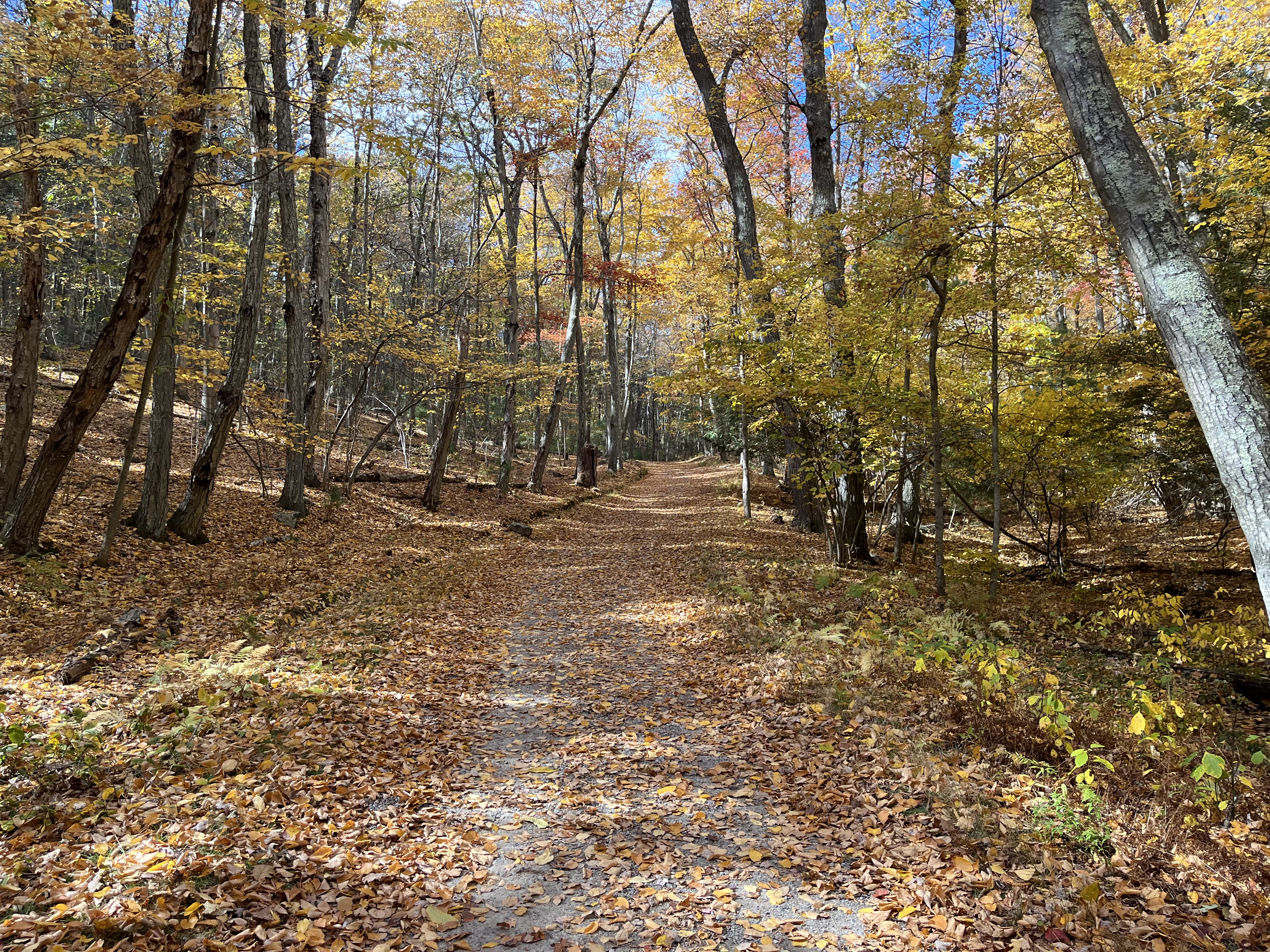
I don’t think that I am stepping out on a limb saying that we need nature, and the time to enjoy it. Taking a walk in any natural environment, whether it be a forest, a beach, your local park, even a desert produces measurable benefits to your physical and mental health. I think of a walk in the woods as a way to reset from the daily noise most of us hear from the rest of our busy lives.
The physical benefits alone: heart health, blood pressure, metabolism, are well established. But that’s not the part that interests me most. I want to talk more about the stress reductions, cognitive restoration, and improvements to mental health and mood.
Taking a 30 minute walk in a natural setting (local woods) three or four times a week can lower cortisol and improve your memory which enhances creativity and problem-solving. It helps reduce anxiety and improves mood. The further you remove yourself from the sights and sounds of civilization, the more effective your walks will be.
In 2013, Bernie Krause presented The Voice of the Natural World at TEDGlobal in Edinburgh, Scotland. He described how natural soundscapes function and how an ecosystem’s health can be heard through acoustic patterns. Healthy ecosystems tend to show organized acoustic patterns, where species occupy distinct frequency “bands,” avoiding overlap—similar to instruments in an orchestra. It is a fascinating presentation and is only 15 minutes long.
What fascinated me most is the idea that sounds can be classified into three categories. Krause described sound as coming from the Geophony (sounds like wind, rain, waves, a brook or river), Biophony (sounds from living organisms like birds, insects, mammals), or the Anthrophony (human-generated noises like car engines, machinery, aircraft, talking, music).
The world most of us live in now has far too little biophony and geophony because of so much anthrophony overwhelming them.
The songs of birds in the trees of your neighborhood are masked by the noise of a leaf blower or a lawn mower. The sound of the wind gets replaced by the engines of cars going by on the road.
A walk in the woods helps change that. As you go deeper into a forest there are fewer sounds from man-made sources and you can better hear the restorative sounds of nature. And trees do a great job of insulating you from the sounds of nearby traffic.
While music can be a nice anthrophonic sound, think about how irritating it is to hear someone else’s music where you aren’t expecting it. Whether it be in the car next to you, on a walking trail in a state park, or at the beach, it is invasive to your thoughts and experiences. It is never restorative. The same can be said about music you choose. Take the earphones out. Let the wind, the birds, and whatever else is there do the work. It’s those sounds that improve your health. Let nature’s sounds take over anything made in the anthrophony.
Leave a Reply