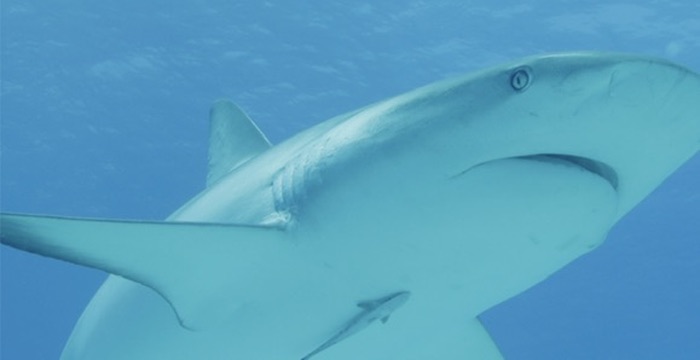
When catching a shark one must be prepared, practiced, and focused on the task at hand. The safety of the team is the #1 priority along with the safety and health of the shark. No person other than the researcher and an assistant goes near the shark until it is secured and docile. If the researcher feels that the shark’s health is in any danger, or if the shark’s temperament might in any way put a person in danger, the shark is released.
Think of the shark team as a NASCAR pit crew. Everyone is practiced and prepared. They know what their responsibilities are. All materials needed are prepped and ready before the shark gets to the side of the boat. The team is focused on their tasks to ensure their safety and the safety of the shark.
One needs a minimum of four people to do this. Six is better.
- One person is in charge, evaluating the health and safety of the shark, and, more importantly, the safety of the crew. This person ensures that everything is running smoothly, safely, and as quickly as possible without sacrificing safety.
- One person (research staff or boat crew) controls the head of the shark by holding the line (with a hand 3 feet or more from the mouth), which is also cleated to the boat. At times, the shark may also be controlled manually by research staff or boat crew holding the dorsal or pectoral fins. No one (other than the research staff or boat crew) is permitted to participate in the tagging process while positioned forward of the dorsal fin. No students are allowed to touch the shark above its dorsal fin. All samples and measurements that they help with are taken from the dorsal fin and back.
- One person is handling materials and tools needed for the work-up. Recording and cataloging samples as they come.
- One person is at the tail of the shark, keeping things stable and being available to help the researcher collect data/sample.
Catching and securing:
- In New England waters, sharks are caught with rod and reel using a circular hook and local bait.
- Once brought to the side of the boat, a rope is put around the tail, and if the shark is big enough (> 5’), a steel cable is wrapped around the midsection, under the pectoral fins. So the shark is held near the boat with three points of contact (hook in mouth, cable around mid-section, rope around tail).
- ONLY the captain, mate, or researcher is ever allowed to be near the shark’s mouth. No one (other than the research staff or boat crew) is permitted to participate in the tagging process while positioned forward of the dorsal fin.
- While rare, in the event the shark responds suddenly to any part of the tagging process and begins to thrash, everyone backs away from the gunwale and allows the shark to return to a docile state, as the shark is still secured via the tail rope, fishing line, and if used, cable.
- All work is done with the shark in the water and the team leaning over the gunwale to measure, collect, and tag. While they do lean over the boat, they do not go so far out with a chance of falling in. If the gunhale is high, one person will ‘spot’ the team member holding a belt loop or their shirt. The people stay in the boat, the shark stays in the water.
Measuring Length: Three lengths of the shark are measured using a tape measure- Pre-Caudal length, fork length, and total length. A comparison of these lengths indicate the shark’s age (juvenile or adult).
- The end of the tape measure is placed on the shark’s snout by the researcher/mate and then the tape is pulled down to those three spots to get their lengths.
- Once the tape is laid out, someone can hold it near the dorsal fin so the researcher/mate can remove the end from near the snout.
Tissue and Blood samples: A variety of tissue and blood samples are taken to evaluate the health of the shark. Each is brought into the lab for processing.
- Fin Clip
- A small piece (< 1cm2) of the dorsal fin is clipped off using small scissors. The fin is made of cartilage and has no nerve receptors, so the shark does not feel pain there. What is clipped off will regenerate.
- The clip can be used to better understand things like population genetics, toxins they may have in their tissues, and to look at dietary trends.
- Muscle tissue
- Using a small scoop, a sample (< 2 mL) of the shark’s muscle tissue is taken near the base of the dorsal fin .
- The tissue can indicate toxin levels, immune state, and nutritional conditions.
- Blood Sample
- The shark is turned over onto its back, which usually triggers a reflexive response known as tonic immobility, whereby sharks enter a trance-like state and cease all movement. Using a small sterile needle blood is drawn from the caudal vein. Blood may alternatively be drawn from the caudal vasculature while the shark is upright if researchers do not wish to place the shark in tonic immobility (i.e., no cloacal swab or acoustic tagging to occur). Only trained researchers are taking the blood samples.
- The blood can help assess stress levels, pregnancy hormones, immune status, energy stores, and short-term dietary patterns of sharks.
- Cloacal Swab
- While still on its back, a cloacal swab is done using a long Q-tip.
- The swab helps determine the shark’s diet.
Tagging: Most tagging occurs at or on the dorsal fin. There are a variety of tags that can be attached.

- Mark-recapture tags
- All sharks are tagged with an ID tag supplied by NOAA. If the shark is recaptured, this tag has an ID and directions to contact NOAA with location and circumstance.
- These tags are punched into the base of the dorsal fin.
- With the guidance of the researcher, most interns can place this tag easily and safely.
- SPOT (Smart position and temperature) tags
- These tags communicate with a satellite when the shark is at the surface. They transmit temp. data from the water and the position of the shark.
- These tags are secured to the dorsal fin using nylon bolts, which will eventually fall out.
- Only the researcher places this tag.
- PAT (popup archival transmitting) tags
- These tags, also attached to the dorsal fin, are designed to detach after a specified amount of time.
- They record depth, light, temp, and location.
- They can be lanced in, screwed in, or attached with a glue.
- Only the researcher places this tag.
- Biologger / camera tag
- These tags, also attached to the dorsal fin, are designed to detach after a specified amount of time (usually 48 hours or less).
- These can either be manufactured products or custom-built tag packages which typically contain 2 or 3 of the following: depth sensor, tri-axial accelerometer, temperature sensor, and animal-borne cameras.
- These are attached to the dorsal fin by the researcher using a dissolvable metal link.
- Only the researcher places this tag.
- Acoustic tags
- These tags emit a sonic ping that is picked up by acoustic receivers deployed in an area.
- They record the location of the shark, some in real time, most are recorded and downloaded later.
- This is the type of tag the Atlantic White Shark conservancy inserts at the base of the Atlantic Shark’s dorsal fin.
- Beneath the Waves does not use acoustic tags in New England, but does a lot of acoustic tagging in the Caribbean.
- This 3.0 cm long transmitter is surgically inserted into the shark, under the skin near the dorsal fin.
- Only the researcher places the acoustic tag.
What would a student intern be capable/allowed to do during a tagging trip?
All these tasks are done behind the dorsal fin.
- Handout/receive and catalog samples as the shark is being worked up. Kind of like an operating room nurse.
- Measure the shark’s length at the tail.
- Take the fin clip.
- Take the muscle sample.
- Take the cloacal swab.
- Insert the mark-recapture tag.

Leave a Reply